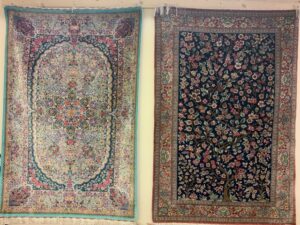
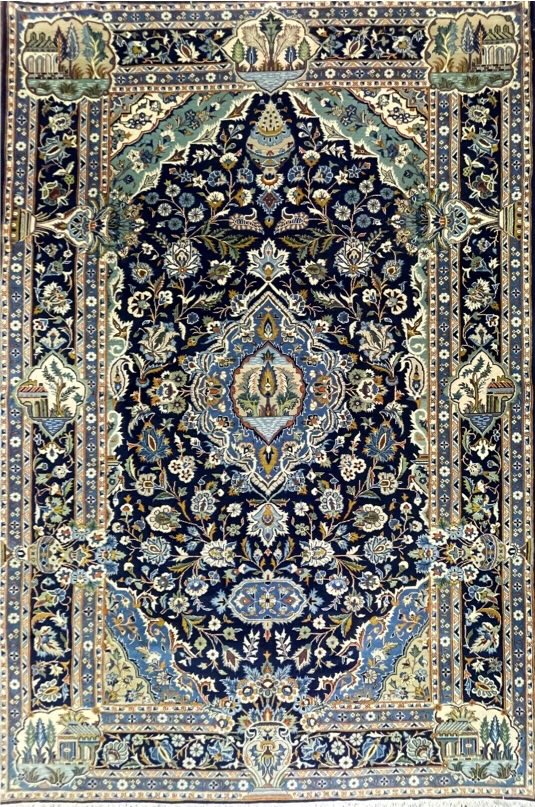
When we look at a handmade Persian carpet, the first thing that captures our attention is the harmony, depth, and brilliance of its colours. Yet what often goes unnoticed is the remarkable fact that these colours, beyond their artistic beauty, also tell part of the story of the birth and development of chemistry.
Long before chemistry emerged as an independent scientific discipline, dyeing had already flourished as an empirical craft in ancient civilizations. By carefully observing nature, people discovered that plants, roots, tree bark, flowers, insects, and even certain minerals could impart colour to textile fibres. Over centuries, these discoveries evolved into a sophisticated body of knowledge, passed from one generation of master dyers to the next. This accumulated wisdom eventually became one of the foundations of modern dye chemistry and textile chemistry.
The Origins of Dyeing
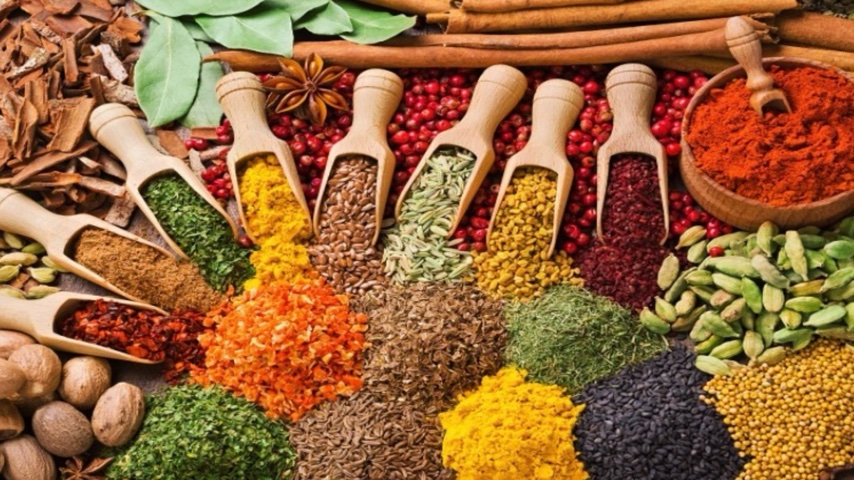
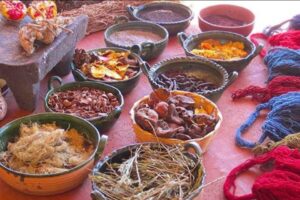
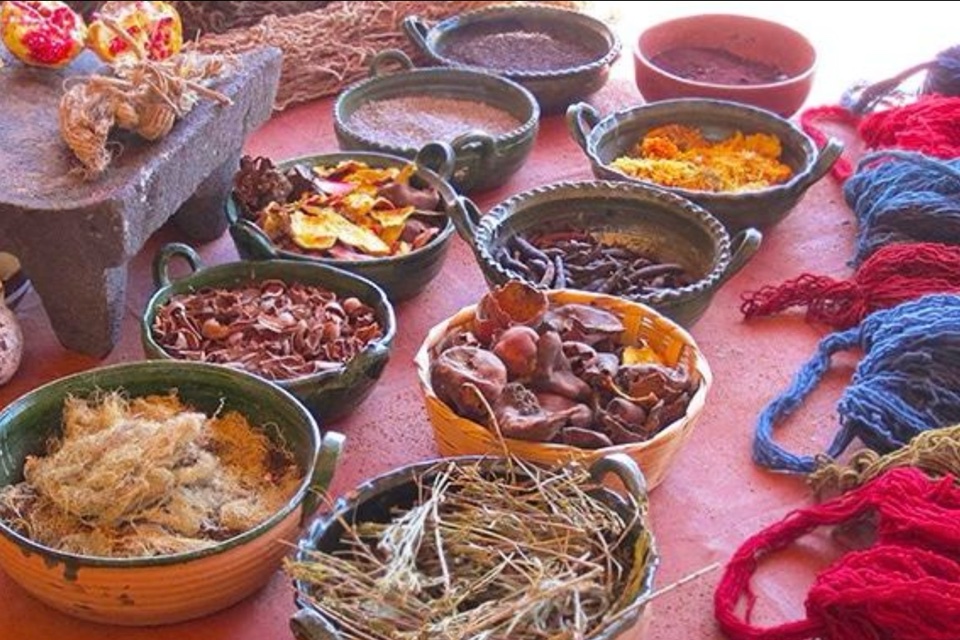
Archaeological evidence suggests that the dyeing of textile fibres dates back at least six to eight thousand years. In ancient Iran, Mesopotamia, Anatolia, and Egypt, artisans used natural dyes such as madder, indigo, weld, walnut husks, saffron, and cochineal to colour wool and textiles. These dyes not only enhanced the beauty of fabrics but also demonstrated remarkable durability—an achievement made possible through a deep understanding of the properties and behaviour of natural materials.
Iran: A Cradle of Natural Dyeing
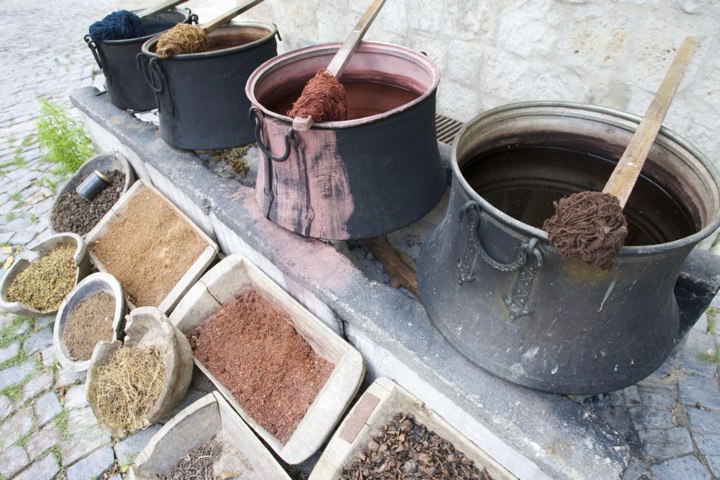
Iran is recognised as one of the world’s oldest and most influential centres of natural dyeing. From the Achaemenid period through the Safavid era, Persian dyers gained an international reputation for their mastery of extracting plant dyes, fixing colours to fibres, and creating harmonious colour palettes. Refined over centuries through observation, experimentation, and practical experience, this knowledge became one of the defining characteristics of Persian carpet artistry.
Traditional Persian dyeing was founded upon several essential principles: selecting the finest wool, using mordants such as alum to improve colour fastness, skilfully combining natural dyes to produce a rich spectrum of shades, and harmonising colours with the climate, culture, and traditions of each region. As a result, every weaving centre in Iran developed its own distinctive colour identity—from the deep crimson reds of Kashan and Isfahan to the rich indigo blues, soft greens, and warm earthy browns of tribal carpets.
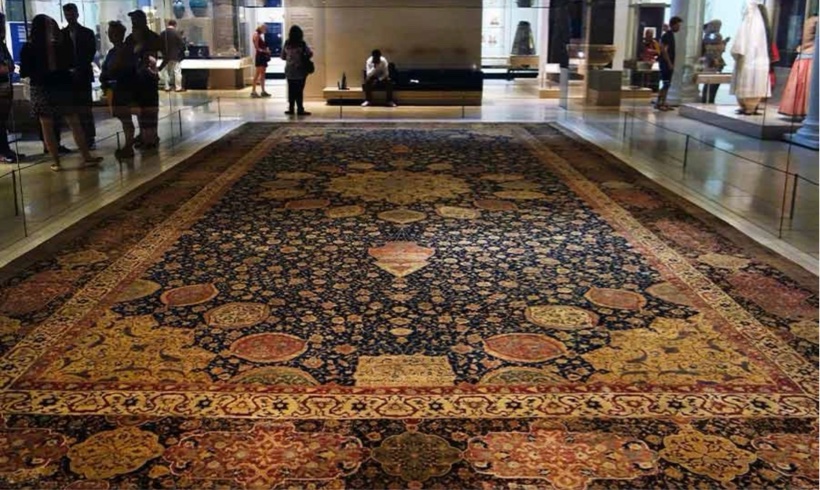
The enduring beauty of many historic Persian carpets is rooted in this remarkable expertise. Rather than fading into dullness with age, natural dyes gradually mature, developing a subtle richness and balance known in conservation as patina. This unique quality explains why many Persian carpets retain vibrant, harmonious colours even after several centuries.
The Dye Workshop: A Laboratory Before Modern Chemistry
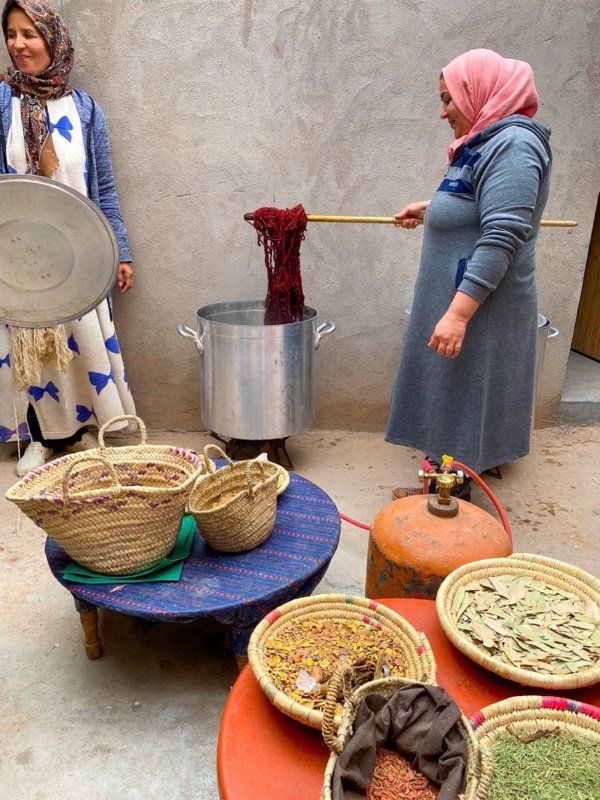
Traditional dye workshops can be regarded as laboratories long before the advent of modern chemistry. Although master dyers knew nothing of molecules, ions, or chemical reactions in the scientific sense, they worked intuitively with many of the principles that would later define the discipline.
They understood that most dyes would not bond permanently to wool or silk on their own. To achieve lasting colour, they employed substances such as alum, iron salts, copper salts, and tin salts as mordants, creating stable bonds between dye molecules and textile fibres. Today, the chemistry behind these processes is understood through the science of coordination compounds.
Master dyers also recognised that the temperature of the dye bath, the duration of boiling, the quality of the water, and the acidity or alkalinity of the solution all influenced the final colour. Madder, for example, can produce shades ranging from soft pink and bright red to deep crimson, purple, and brown, depending on the dyeing conditions. This understanding emerged through centuries of careful observation, experimentation, and refinement—the very approach that would later become the cornerstone of the scientific method.
Persian Carpets and the Advancement of Chemistry
As the global trade in carpets and textiles expanded, the demand for durable and consistent colours increased. This demand encouraged nineteenth-century scientists to study the natural dyes used in Persian carpets and other Eastern textiles. Their investigation of substances such as madder and indigo laid the scientific groundwork for the development of synthetic dyes.
The discovery of the first synthetic dye in 1856 marked a turning point in the history of chemistry. It led to the rapid development of dye chemistry, textile chemistry, and industrial chemistry. From this perspective, the carpet and textile industries were not merely beneficiaries of scientific progress; they were among the principal forces that stimulated it.
Why Natural Dyes Remain Unrivalled
Despite remarkable advances in synthetic colour technology, natural dyes continue to be highly valued by collectors, conservators, and scholars of textile art. Their superiority lies not simply in their botanical origin, but in the unique way they interact with natural fibres.
Rather than deteriorating over time, natural dyes gradually mature, acquiring greater depth, harmony, and subtlety—qualities that synthetic dyes rarely replicate. This living quality gives authentic Persian carpets their enduring visual richness and contributes significantly to their artistic and historical value.
A Legacy of Art, Science, and Culture
Traditional Persian carpet dyeing represents a remarkable fusion of art, nature, and empirical knowledge. Every dye pot embodied centuries of accumulated experience, with techniques and insights transmitted from master to apprentice. Without the benefit of modern chemical theory, generations of dyers developed a profound understanding of natural materials through careful observation and practical experimentation.
A handmade Persian carpet is therefore far more than a beautiful work of art or a valuable object. It is a living document of the history of science, technology, and human culture. Woven into every knot are not only the creativity of the weaver but also the wisdom of generations of master dyers whose intimate knowledge of nature has left an enduring legacy for the world.
Today, the study of traditional dyeing techniques is important not only for preserving the authenticity of historic carpets but also for inspiring contemporary research into sustainable dyes, natural materials, and environmentally responsible technologies. For this reason, every handmade Persian carpet may be seen as a bridge between the past and the future—a place where art, science, and nature come together in perfect harmony.