Most famous handmade rugs in the world:
The Pazyryk Carpet:
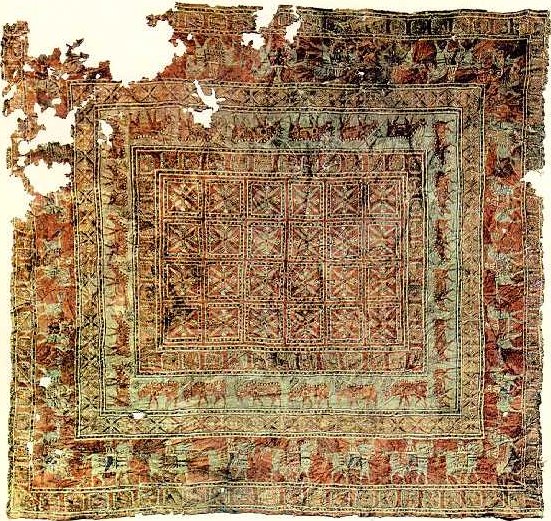
The Oldest Rug in the World, a Testament to the Splendor of Persian Art. Deep within a frozen valley of the Altai Mountains in Siberia, among the ice-covered tombs of the Scythian people, a hidden treasure lay that would transform the history of world art.
The exact dimensions: 1.98 by 1.89 meters
For more information, click on the link below:
The oldest rug – heavenonearthimports.co.uk
The Ardebil, Sheikh safi Carpet:
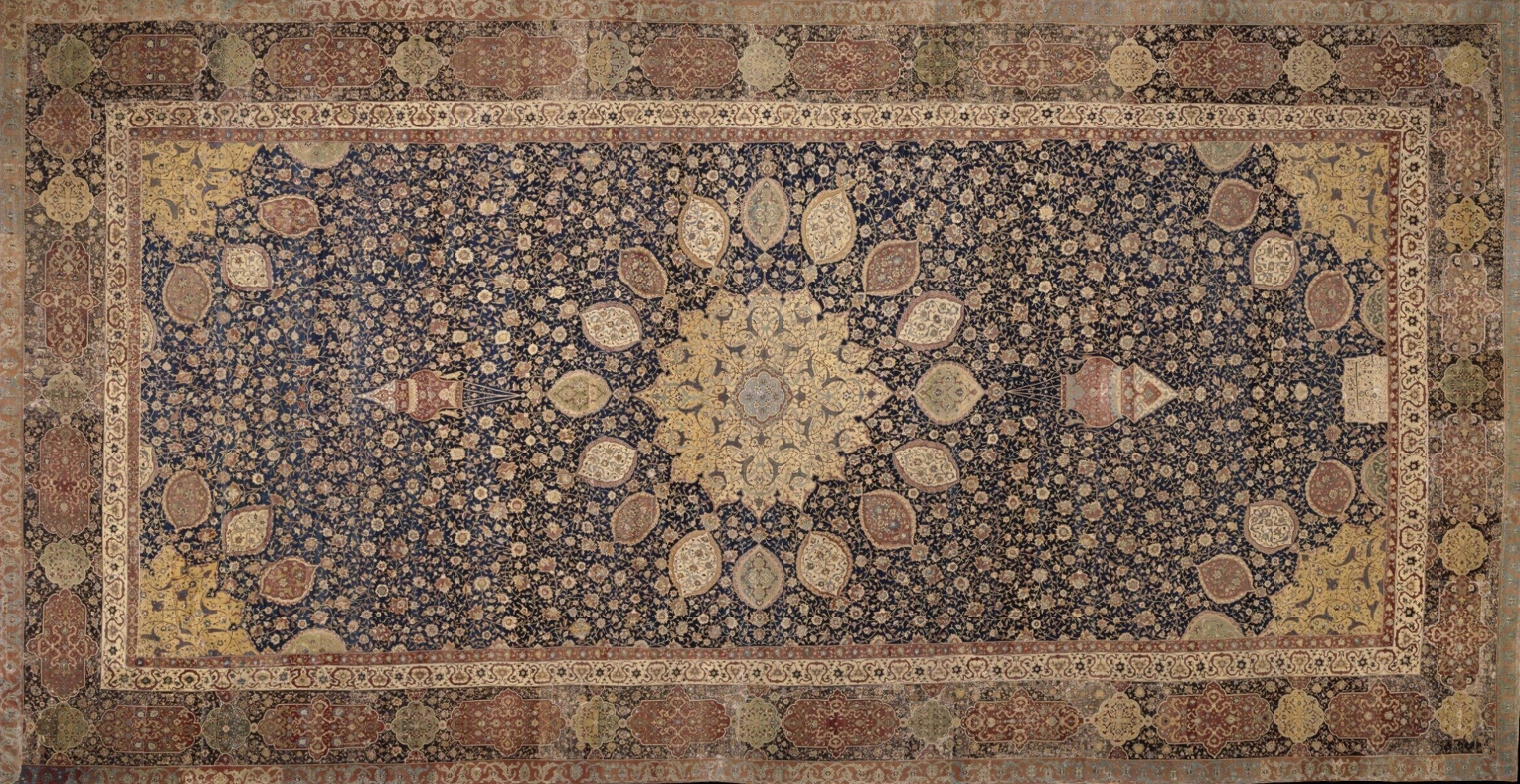
The most famous rug in the Victoria and Albert Museum (V&A) is the monumental 16th-century Ardabil Carpet. Commissioned in 1539 by Shah Tahmasp for the shrine of his ancestor in northwestern Iran.
The largest handmade carpet ever created specifically for a mosque is the hand-knotted carpet inside the main prayer hall of the Sheikh Zayed Grand Mosque in Abu Dhabi, United Arab Emirates.
Size:
Approximately 5,400–5,630 square meters (about 60,546 square feet), covering the entire floor of the main prayer hall.
Dimension:
• Middle width: 529.5cm
• Middle length: 1044cm
Mantes Carpet at Louvre Museum,
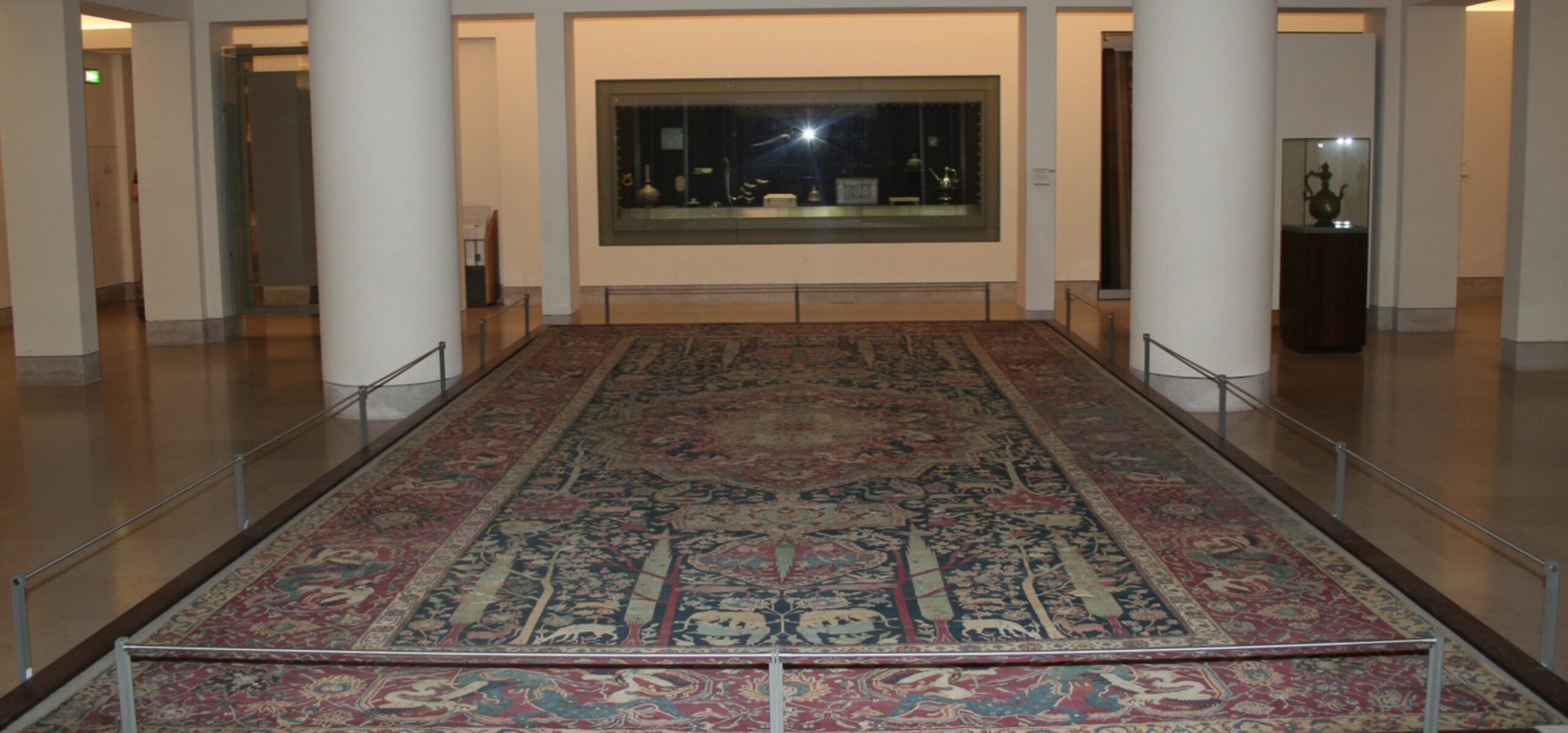
This is one of the finest surviving Persian carpets from the Safavid period (c. 1530–1550), displayed in the Department of Islamic Arts at the Louvre Museum in Paris.
Its dimensions are approximately:
•   780 cm × 390 cm (7.8 × 3.9 m)
•   25.6 × 12.8 ft
The Emperor’s Carpet
second half 16th century
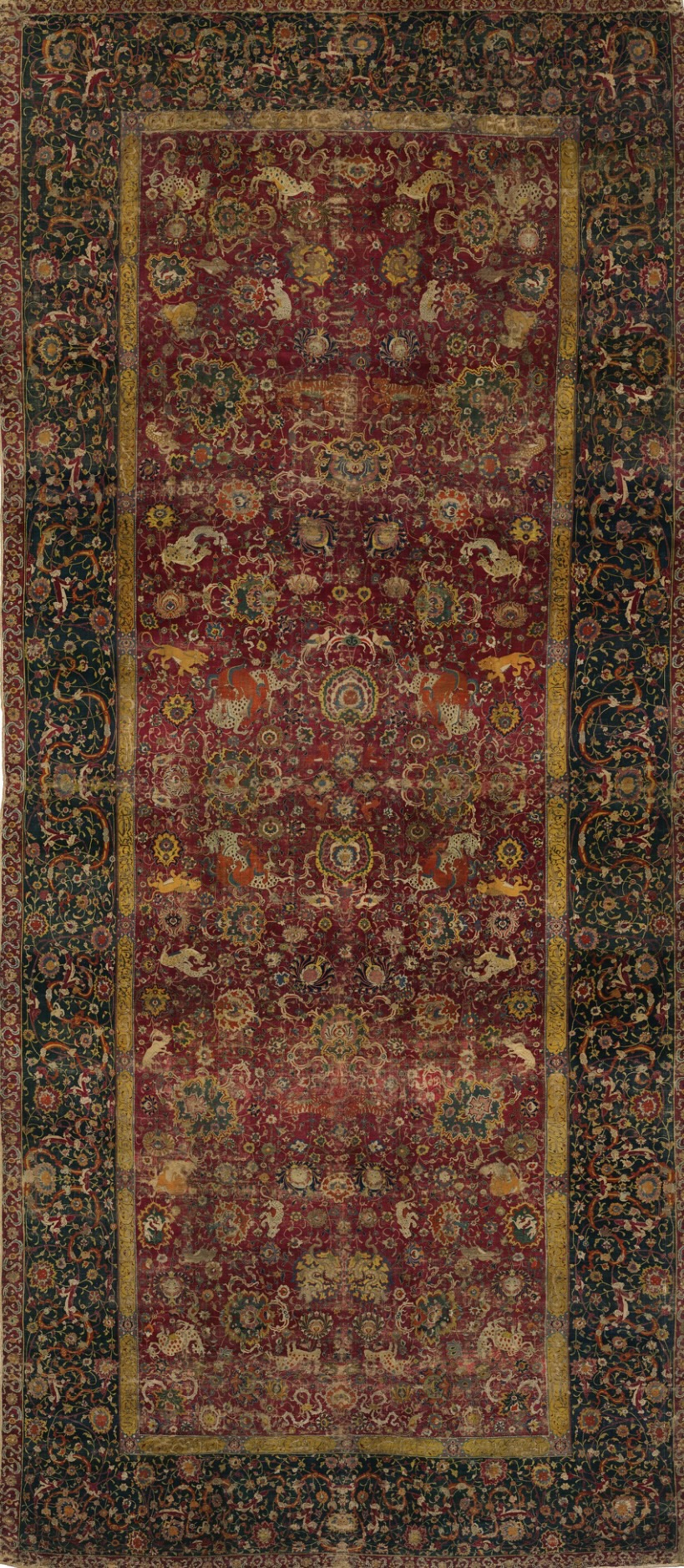
On view at The Met Fifth Avenue in Gallery 462
One of the finest products of the Safavid court ateliers, this carpet once adorned the summer residence of the Habsburg emperors. The main field balances a sophisticated net of floral scrolls, large composite palmettes, cloud bands, buds, and blossoms with a myriad of real and fictional animals—dragons and Chinese antelope, lion and buffalo, tigers and leopards, ducks and pheasants. A verse found in the inner guard band likens a garden in springtime to the Garden of Paradise.
References
• Title: The Emperor’s Carpet
• Date: second half 16th century
• Geography: Attributed to Iran
• Medium: Silk (warp and weft), wool (pile); asymmetrically knotted pile
• Dimensions:
L. 299 in. (759.5 cm)
W. 133 1/2 in. (339.1 cm)
Wt. on a 10″ tube: 144 lbs. (65.3 kg)
The largest handmade carpet in the world :
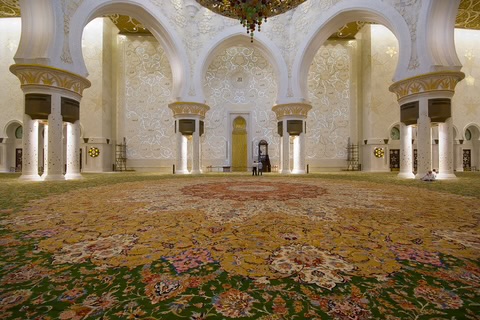

The largest handmade carpet ever created specifically for a mosque is the hand-knotted carpet inside the main prayer hall of the Sheikh Zayed Grand Mosque in Abu Dhabi, United Arab Emirates.
Size:
Approximately 5,400–5,630 square meters (about 60,546 square feet), covering the entire floor of the main prayer hall.
Materials:
• Predominantly wool (around 70%)
• Cotton foundation and backing (around 30%)
• Made using naturally dyed yarns in multiple colors
• Total weight: approximately 35 tonnes
For more information, follow the link below:
The largest hand-knotted Carpet in the world – heavenonearthimports.co.uk
– The Hunting Carpet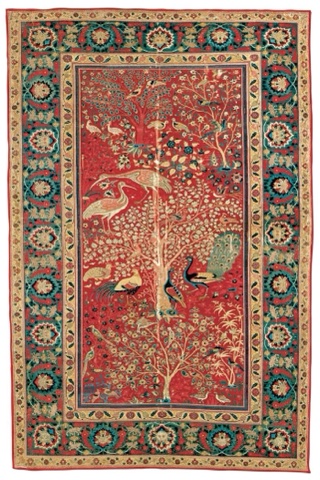
•   A masterpiece of Persian Safavid art.
•   Depicts mounted hunters among animals and flowering landscapes.
•   Considered one of the greatest narrative carpets ever woven.
Location: Museum of Applied Arts
Stubenring 5
1010 Vienna (Wien), Austria
Its key specifications are:
Dimensions: 687 × 331 cm (approximately 22 ft 6 in × 10 ft 10 in)
Date: First half of the 16th century, during the reign of Shah Tahmasp I.
Probable place of manufacture: Kashan, Central Iran, one of the greatest weaving centres of the Safavid period.
Materials:
Warp: Silk
Weft: Silk
Pile: Silk, with asymmetrical (Persian) knots
Brocading: Silver strips, partly gilded with gold, wrapped around a silk core, creating shimmering highlights.
Knot density: Approximately 14,300 knots per square decimetre (about 920 knots per square inch), making it one of the most finely woven carpets ever produced