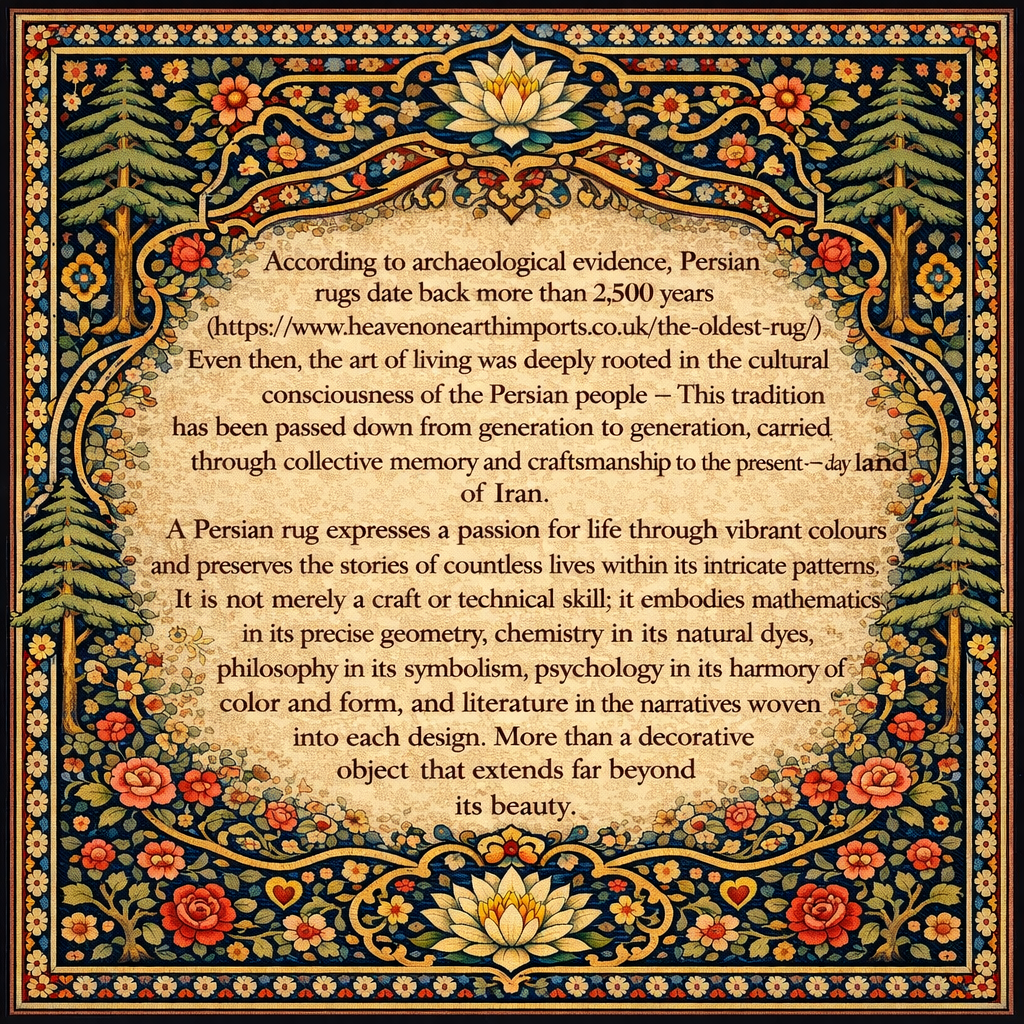
According to archaeological evidence, Persian rugs date back more than 2,500 years. Like a serene water lily at the center of a medallion, their origin rests in stillness and depth. Even then, the art of living was deeply rooted in the cultural consciousness of the Persian people — roots stretching like steadfast cedar trees, strong and enduring.
🌹🌹🌹
This tradition has been passed down from generation to generation, unfolding like a climbing vine of roses along the border of time. Each bloom carries memory; each petal, a whispered story of hands that tied patient knots in quiet devotion. Through collective memory and craftsmanship, this woven heritage has reached the present-day land of Iran, standing tall like rows of elegant pine trees guarding a timeless garden.
🌲 🌲
A Persian rug expresses a passion for life through vibrant colours, its pattern alive with small heart motifs beating gently between blossoms. Within its intricate geometry lies mathematics; within its luminous dyes, chemistry drawn from earth and root. Its symbols carry philosophy like branches reaching upward; its harmony of colour and form reflects the subtle psychology of balance and emotion.
🌹❤️🌹
Literature, too, is woven into every design — narratives entwined like roses circling a central lily. More than a decorative object, the Persian rug is a living manuscript framed by cedar strength and pine resilience. It is a garden of knowledge, bordered by beauty, rooted in heritage, and blossoming endlessly beyond its own threads.
🪷🌹🌲❤️🌲🌹🪷